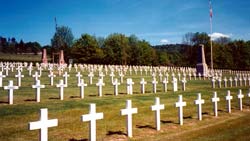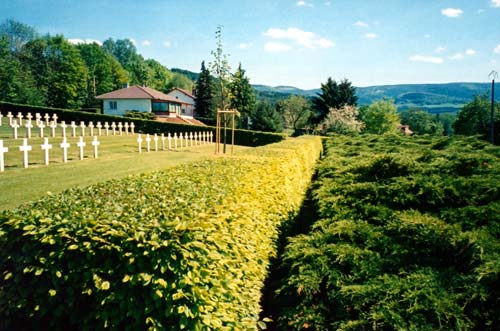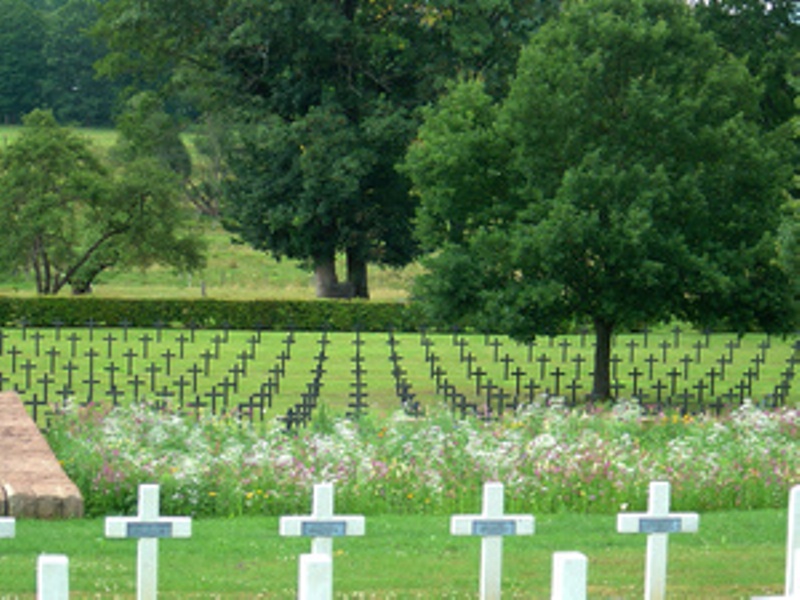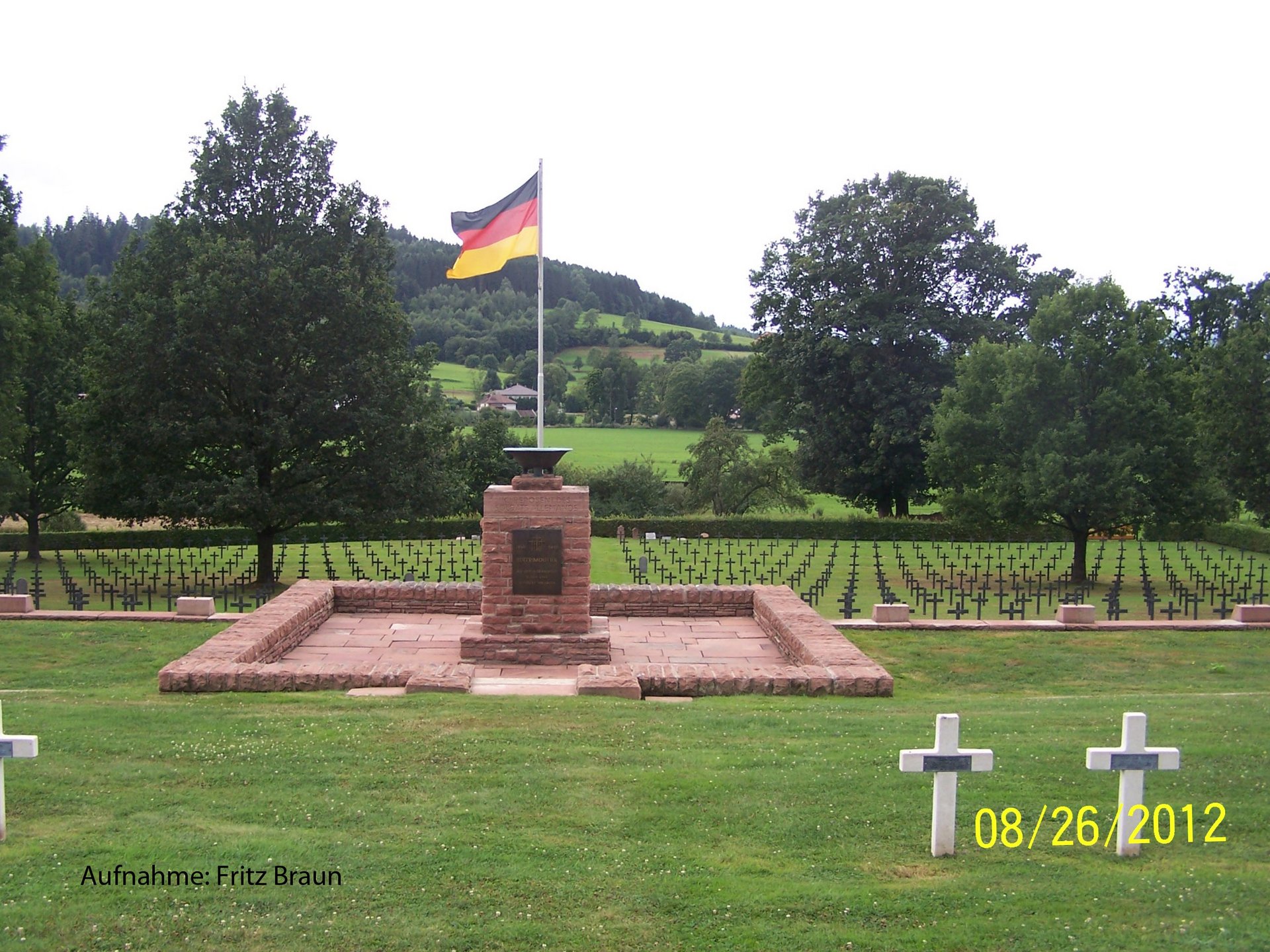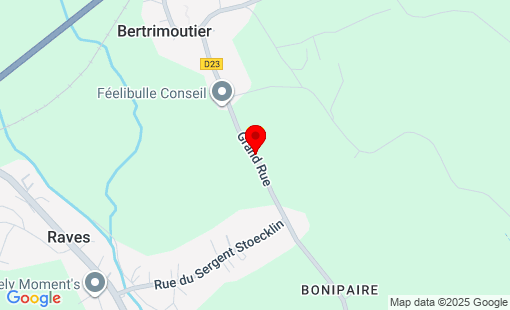
More than 6,700 German war dead and around 950 French casualties from the First World War are buried at this war cemetery in the Département Vosges.
Burial
The cemetery was established by the French military authorities in March 1921. Fallen soldiers who had been provisionally buried within a radius of up to 40 kilometers during the fighting found their final resting place here. Most of them had died in the last days of August 1914 during the "Battle of Lorraine", when the German armies threw back the French troops that had advanced across the Reich border and pursued them over the Vosges mountains. Others died in renewed fighting from October to December 1914 and during the war of position from 1915 to 1918.
The Germans resting here belonged to units whose home garrisons were mainly in Bavaria, but also in Baden, Württemberg, Hesse, Saxony, Brandenburg and the Rhineland.
History
The Volksbund Deutsche Kriegsgräberfürsorge e. V. (German War Graves Commission) undertook the first repair work on the German part of the cemetery on the basis of an agreement with the French military authorities on the treatment of joint cemeteries in 1928.
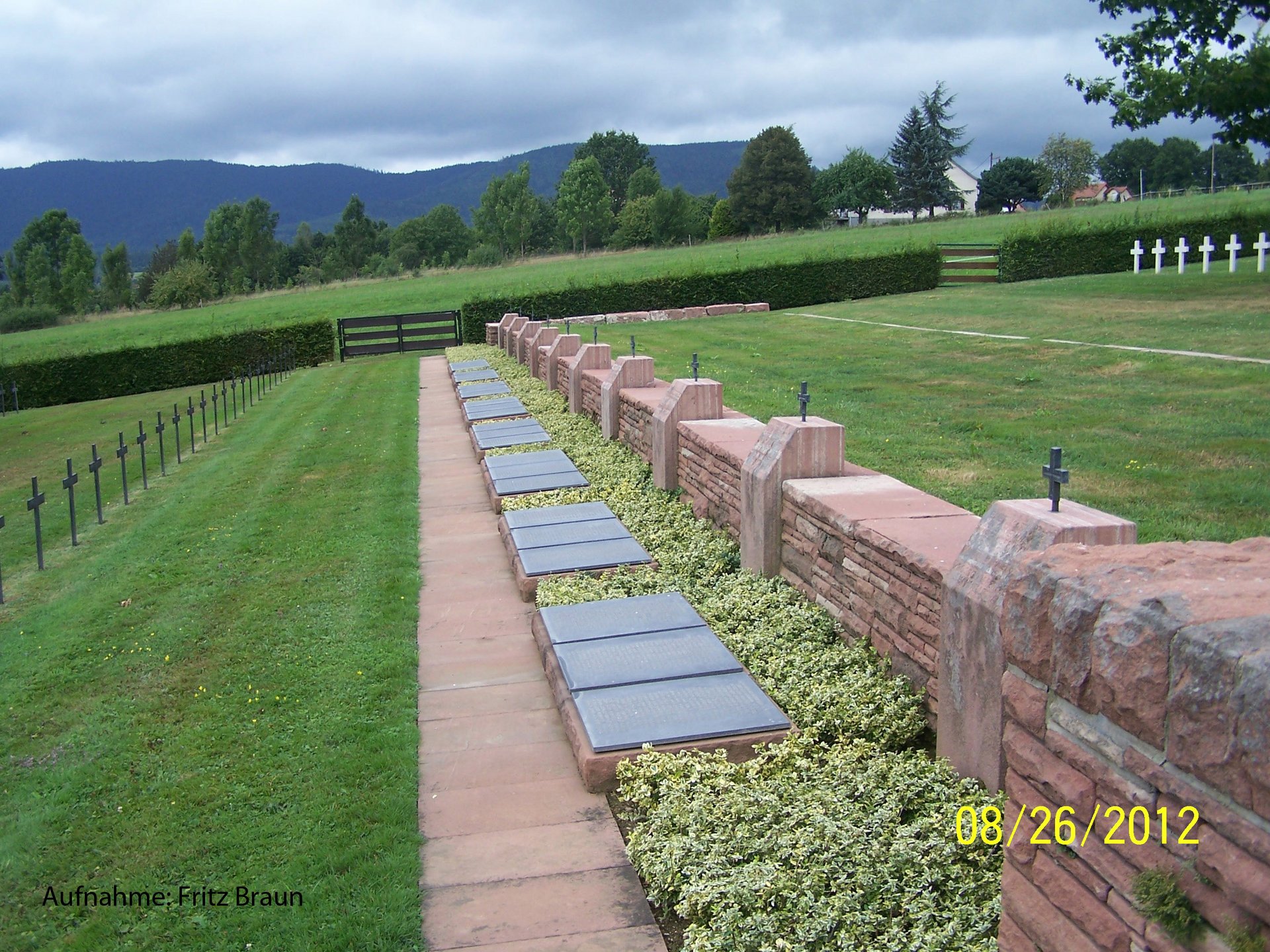
in 1931, the two common graves received a border made of red Vosges sandstone. The entrance was redesigned with a forged gate and wing walls. A memorial was erected between the communal graves. A permanent marking of the German graves was not possible due to a lack of foreign currency and later because of the Second World War.
After the conclusion of the Franco-German War Graves Agreement of July 19, 1966, the Volksbund - with financial support from the German government - was able to take care of the final design of the German military cemeteries of the First World War in France.
Young people had already begun preparatory gardening work in the Volksbund youth camps (now work camps) of the time. in 1980, the grounds in Bertrimoutier were thoroughly cultivated and the previous temporary wooden grave markers were replaced by metal crosses with the names and dates of those buried here cast into them. The names of the dead resting in the common graves are inscribed on cast metal plaques on the surrounding wall.
Only around a third of the fallen are known by name. More than 1,200 rest in individual graves. More than 5,500 victims are buried in the two common graves. Jewish soldiers are also buried here.