Germany
Bad Emstal-Merxhausen Kriegsgräberehrenstätte
Total Occupation: 243 fatalities
Total Occupation: 243 fatalities
Address
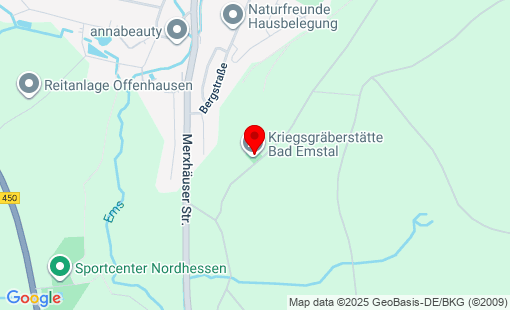
Bergstraße 2
34308 Merxhausen, Kriegsgräberehrenstätte
Germany
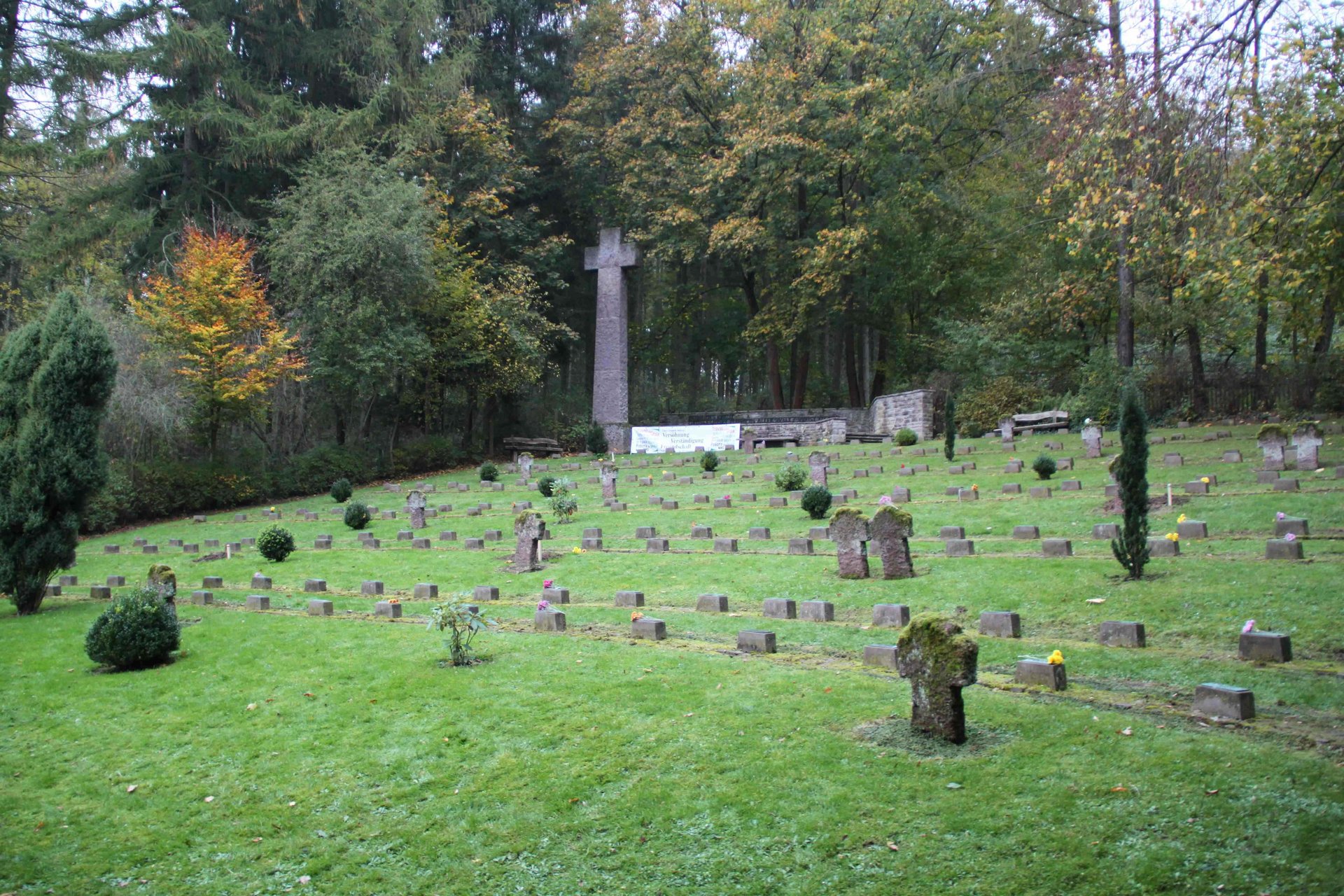
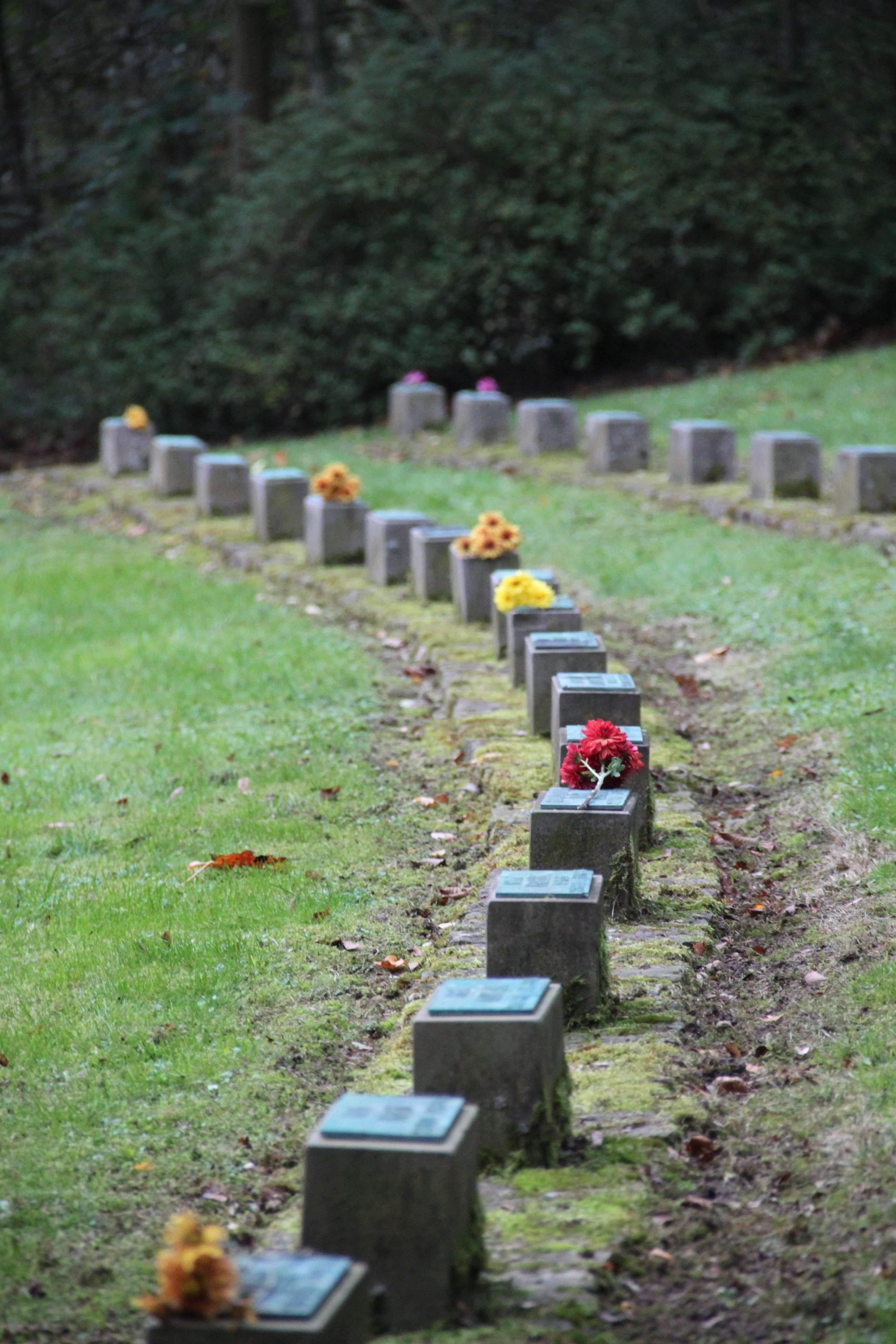
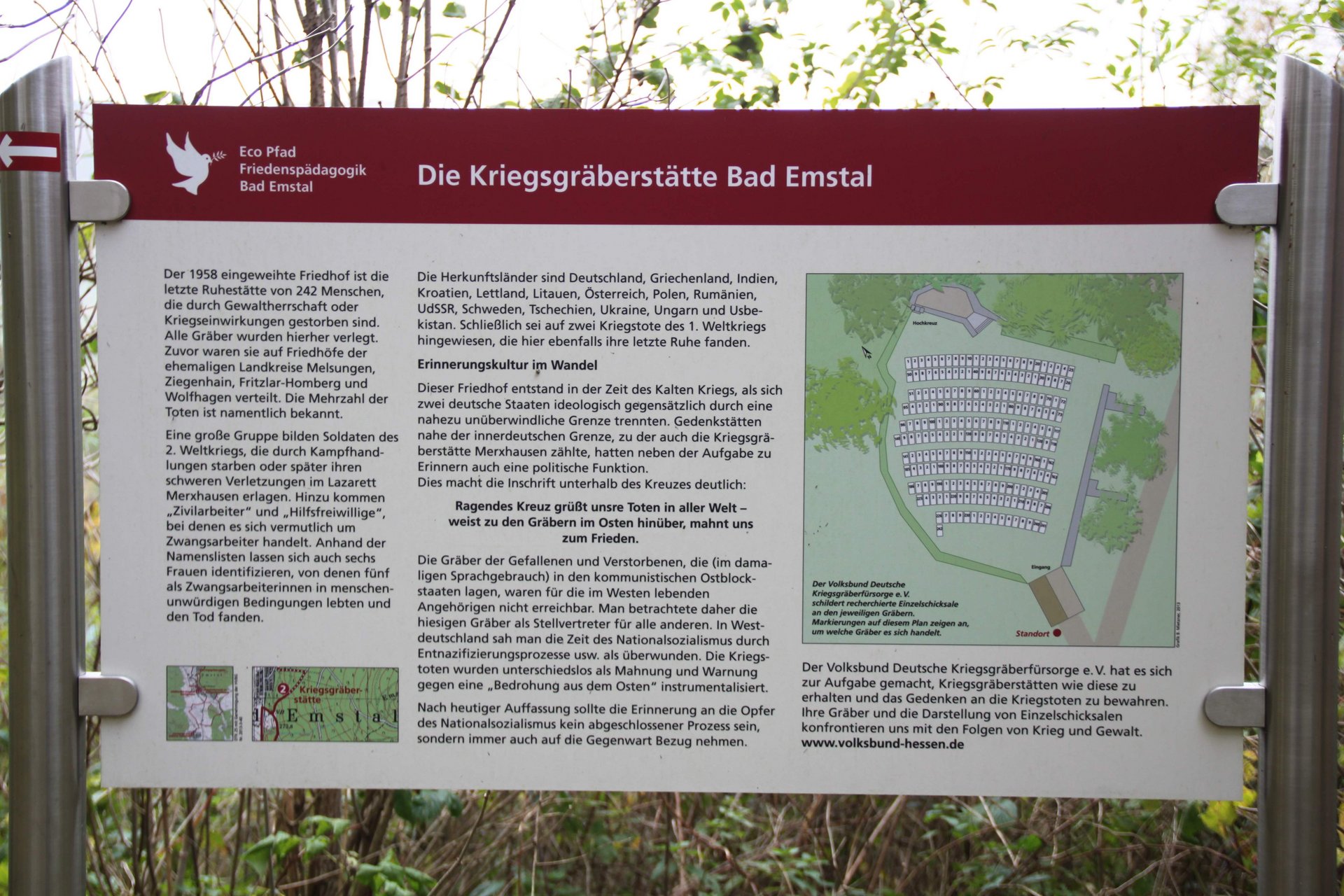
This text is a result of the research project "On the historical reappraisal of selected war cemeteries in Hesse" conducted by the Hesse State Association:http://www.volksbund.de/hessen/projekte0/forschungsprojekt0.html The Bad Emstal war cemetery was dedicated on June 15, 1958 by the then Minister of the Interior, Heinrich Schneider. Prior to this, a total of 242 war dead and victims of National Socialist tyranny from the former districts of Melsungen, Ziegenhain, Fritzlar-Homberg and Wolfhagen were reburied in the newly created cemetery on the edge of the forest. Today, the war cemetery is the responsibility of the municipality of Bad Emstal. Since January 20, 1973 - the year in which all municipalities were requested to report existing war graves - no further war dead have been reburied, so that the existing official list of graves at the Bad Emstal war cemetery was the starting point for the specific research by the Volksbund Hessen. In addition to the 131 registered soldiers of the Wehrmacht and the Waffen-SS, most of whom died in the nearby Merxhausen military hospital, civilians and forced laborers are also known to be buried at the Bad Emstal war cemetery. The foreign war dead who fought on the side of the Wehrmacht and the SS against the Allied troops come from the Baltic states, the former USSR and India, among others. Whether the decision to fight in the Wehrmacht or the SS was voluntary or forced is no longer fully comprehensible today. As a rule, this decision depended on personal circumstances and the scope for personal choice. However, among the foreign dead there are also graves of men and women who were forced to work in the region under inhumane conditions and died as a result. The list of graves also contains references to the grave of a nurse, a fire warden, a police constable and at least two deaths from the First World War, which could be investigated in the course of further intensive research.