France
Billy-Montigny
Total Occupation: 2.511 fatalities
Total Occupation: 2.511 fatalities
Address
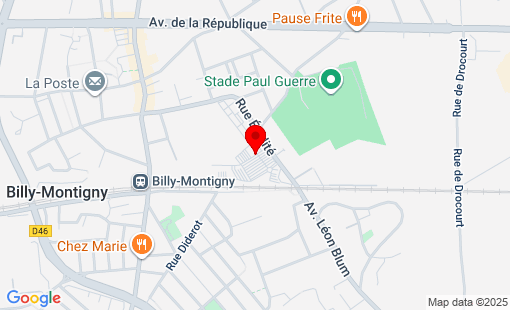
Rue de l'Egalité
Billy-Montigny
France
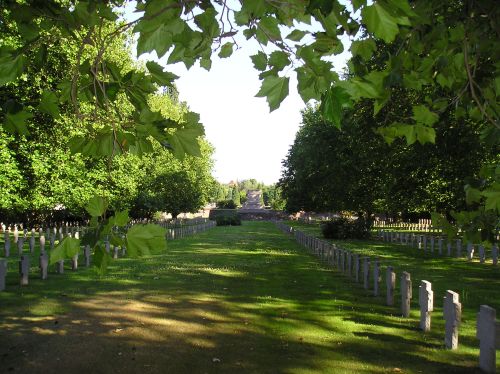
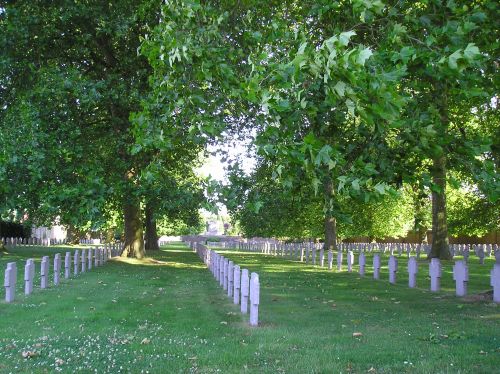
The German military cemetery Billy-Montigny was established in June 1915 by the German troops, who buried their dead here until April 1918. Over 800 of them fell in the major battles in the spring and fall of 1915; just as many died as a result of the fierce positional fighting in 1916. Further heavy losses were claimed by the Allied attacks north of Arras in the spring of 1917 and in Artois in the fall. In contrast, the number of people who lost their lives in 1918 in the trench warfare or during the German offensive in April 1918 was relatively low. After the war, the French military authorities transferred the German dead from a cemetery established almost simultaneously in neighboring Hénin-Liétard and from a further 16 communes in the area northeast of Arras. The German troops initially erected a crucifix as the central marker. This was later followed by a monument made of natural stone, which lost its upper structure and the adjoining side collonades after the war. It is not known whether the upper part of the monument was damaged during the fighting. The dead belonged to units whose home garrisons were in Bavaria, Baden, Württemberg, Saxony, Thuringia, Brandenburg, Schleswig-Holstein, Mecklenburg, Pomerania, Silesia, Posten, East and West Prussia as well as in the Hanseatic cities of Hamburg, Bremen and Lübeck. Repair work between the wars The Volksbund Deutsche Kriegsgräberfürsorge e.V. carried out the first repair and expansion work to improve the condition of the cemetery on the basis of an agreement reached with the responsible French military authorities in 1926. This included planting trees and greening the graves. However, the problem of permanently marking the graves remained unresolved due to a lack of foreign currency and the outbreak of the Second World War in 1939. Final design Following the conclusion of the Franco-German War Graves Agreement of July 19, 1966, the Volksbund Deutsche Kriegsgräberfürsorge e.V. - with financial support from the German government - was able to undertake the final design of the German military cemeteries of the First World War in France. In addition to a fundamental landscaping overhaul of the site, the previous temporary wooden grave markers were replaced with natural stone crosses engraved with the names and dates of those buried here in 1977. The 2511 fallen rest in individual graves. Of these, 78 remain unnamed. For religious reasons, the five graves of the fallen of the Jewish faith were marked with a natural stone grave stele instead of a cross. The Hebrew characters read: 1.) (above) "Here rests buried ....:." 2.) (below) "May his soul be interwoven into the circle of the living".