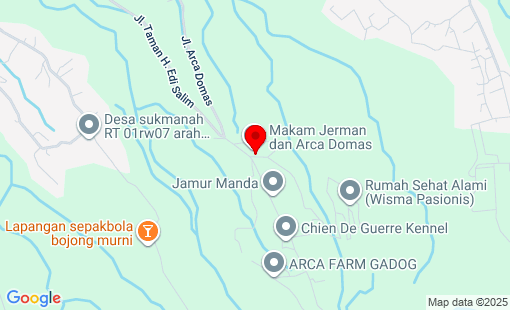
Soldiers from the Second World War are buried at the "Arca Domas" site - near the village of Cikopo close to the city of Bogor, and 70 kilometers south of Jakarta. The access road is paved except for the last few kilometers.
Description of the cemetery
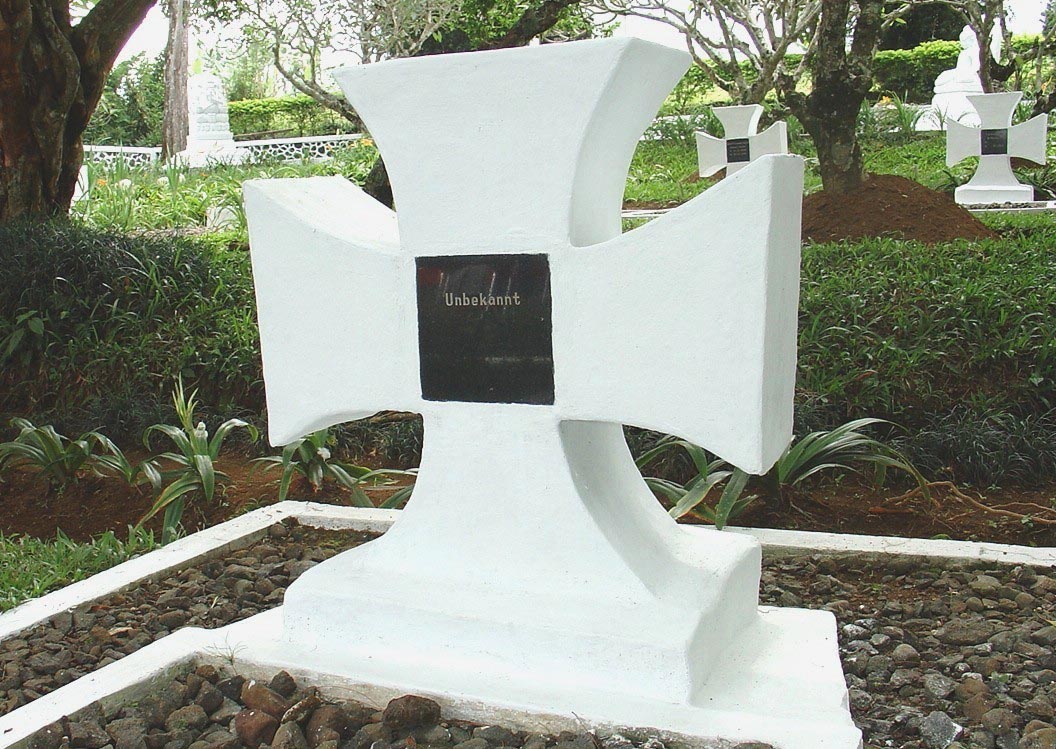
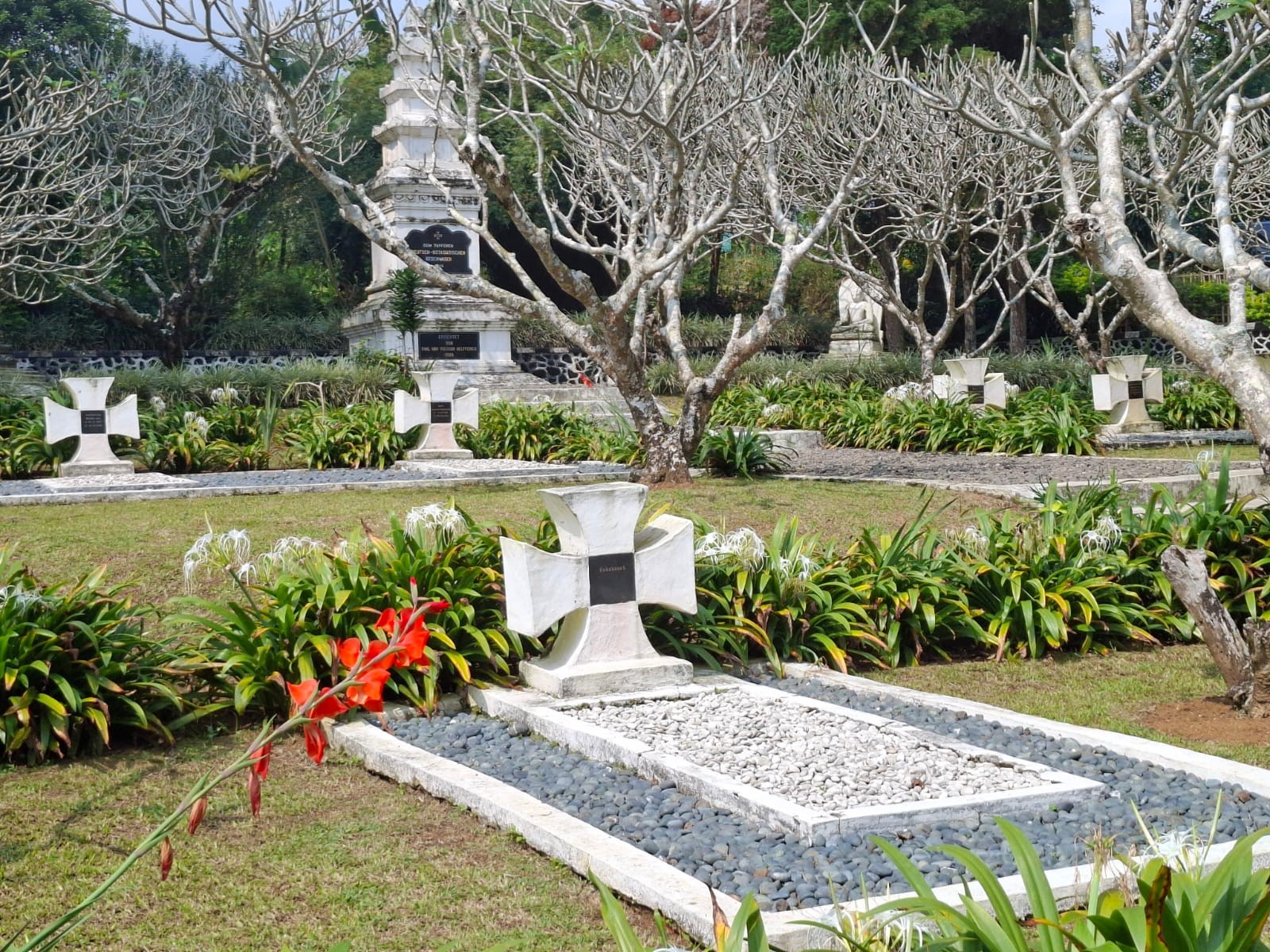
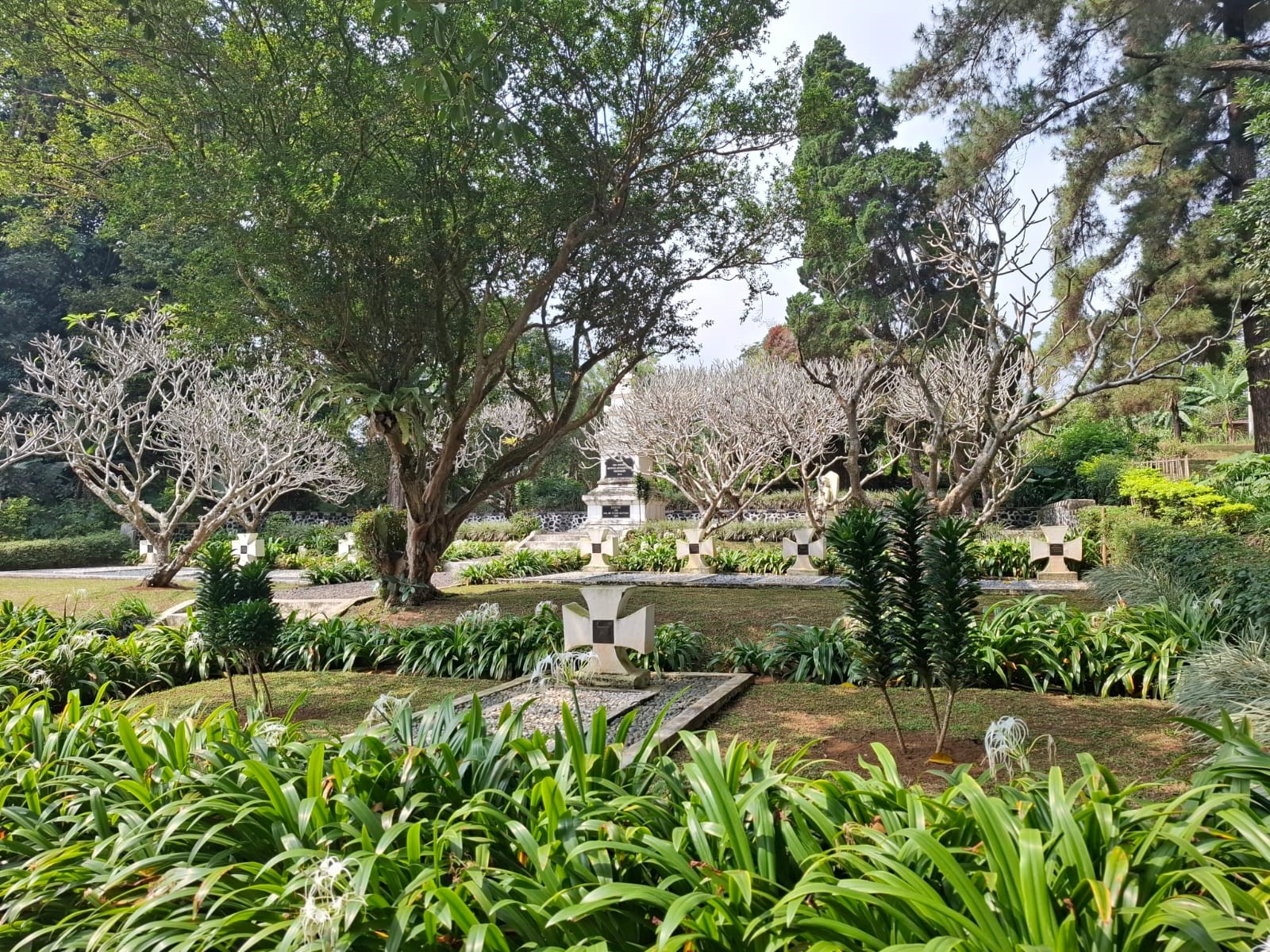
The war cemetery in West Java is located at an altitude of around 1,000 meters. On the slope of the Pangrango volcano, ten white gravestones in the shape of iron crosses stand between huge Waringin trees. Eight graves are marked with names. The main monument is flanked by a Buddha statue and a Hindu Ganesha statue, the deity of wisdom with the head of an elephant.
Occupancy
The ten soldiers, two of whom are unknown, lost their lives to disease or violence almost 10,000 kilometers from their homeland. They came to Indonesia on board submarines. They were supposed to transport vital raw materials for the German navy from the Japanese-occupied country - through the Allied naval blockade. A rather desperate plan by the German naval command, which many sailors paid for with their lives.
History
For centuries, under the Hindu kings from Tarumanagara to Pajajaran, the souls of the deceased were handed over to the gods in a sanctuary on this slope. Four sacred Waringin trees surrounded it. The carved statues and stones numbered around 800 and the cemetery was called "Arca Domas" (Old Sanskrit for "eight hundred statues"). In the 16th century, Islamic warriors destroyed the kingdom and most of the Sundanese converted to Islam. Palaces and temples were lost. The hillside was later cultivated for agriculture. Only the Waringin trees are a reminder of the sanctuary.
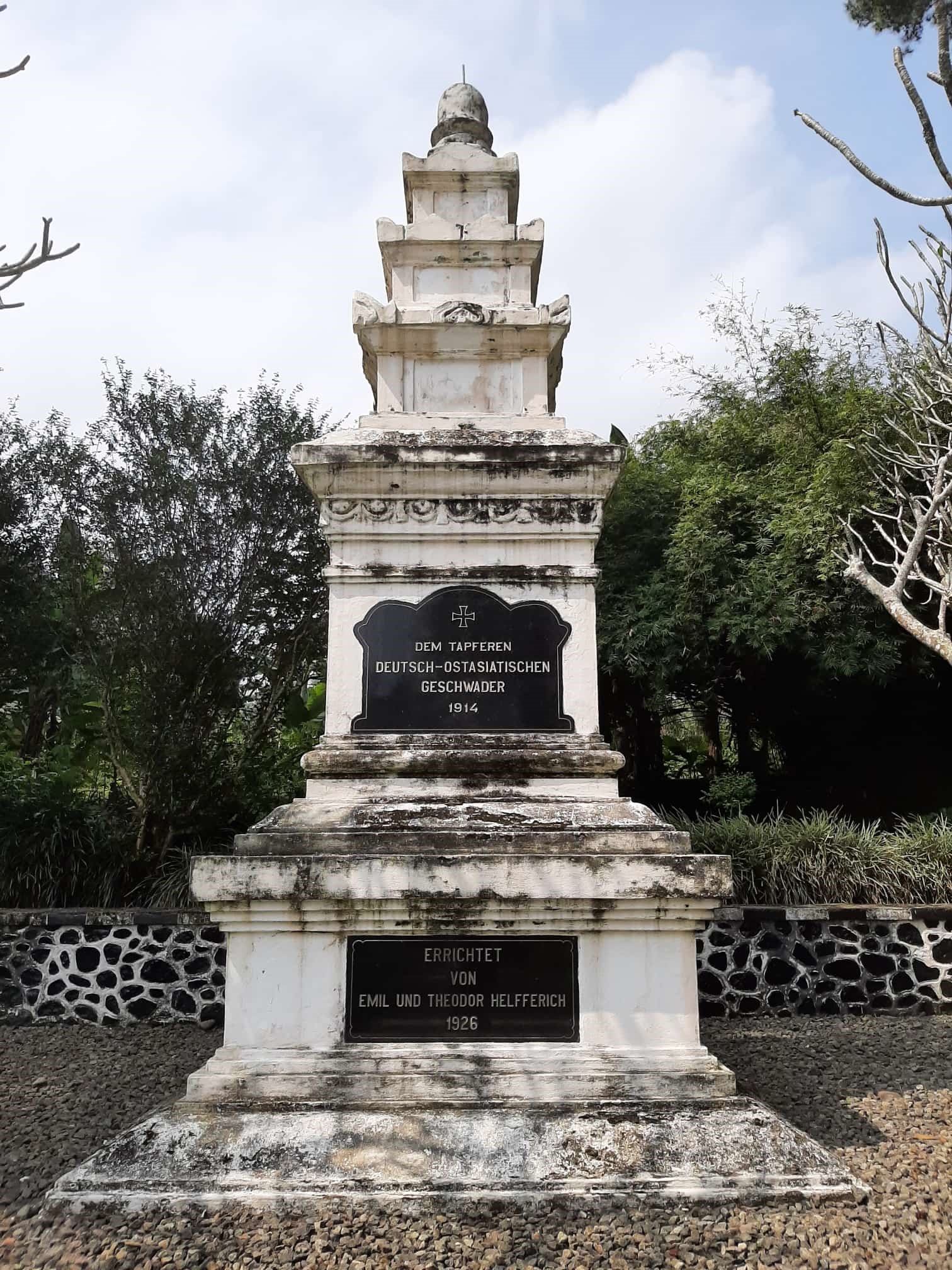
After the First World War, the German brothers Emil and Theodor Helfferich bought 900 hectares of land here for a tea plantation. As their older brother Karl Helfferich was Vice-Chancellor under the last German Emperor, they erected a monument between the venerable trees with the inscription "To the brave German East Asia Squadron 1914. Erected by Emil and Theodor Helfferich" in solidarity with the Imperial Navy and in memory of Admiral Graf Spee's East Asia Squadron, which was sunk by the British. The statues were placed at his side as a tribute to the ancient religions of Java. It was inaugurated in 1926, when the German school cruiser "Hamburg" anchored in the then Dutch colony.
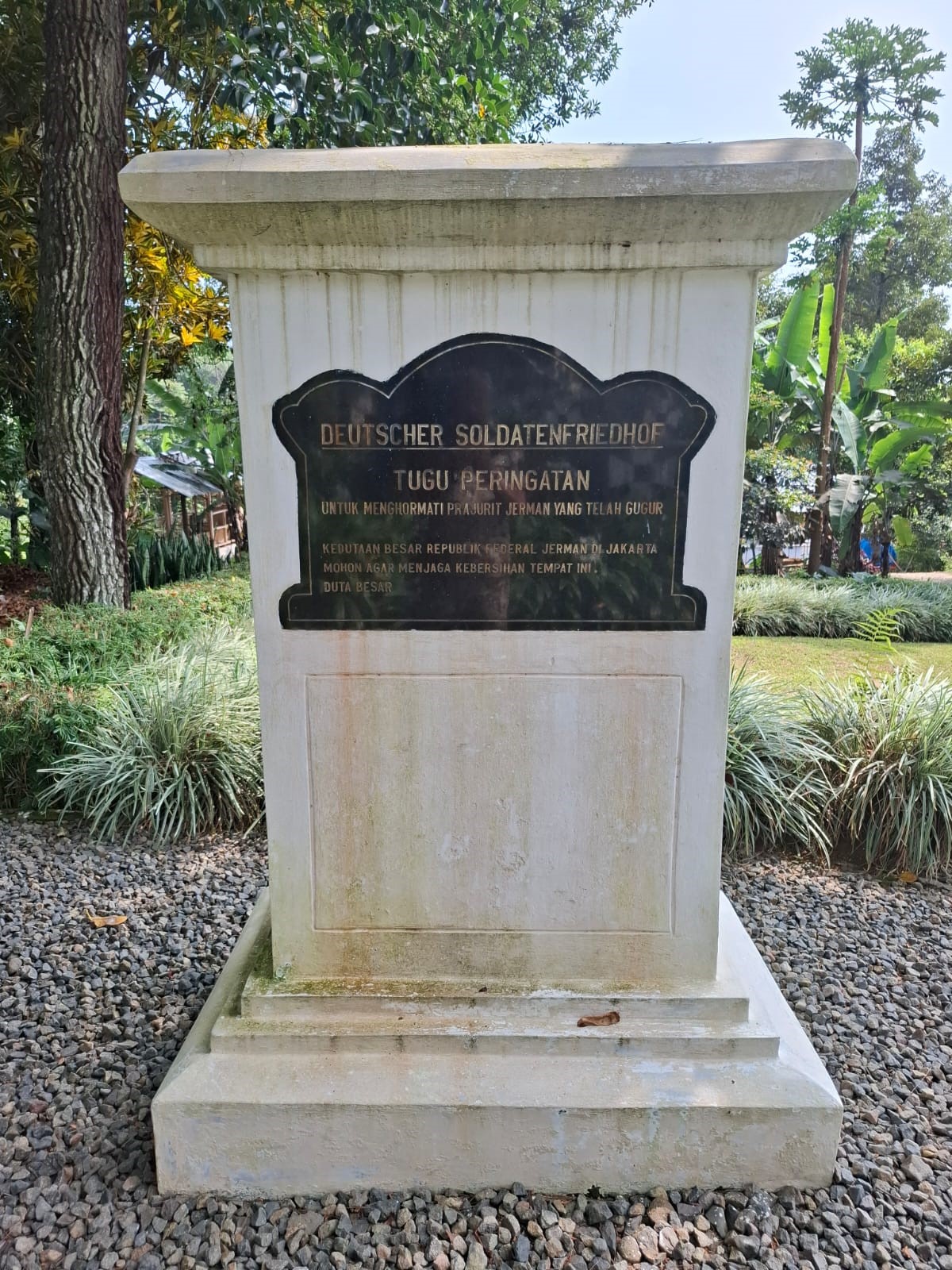
The ten soldiers were buried on this site after the Second World War. The cemetery is looked after and maintained by the German Embassy in Jakarta.