France
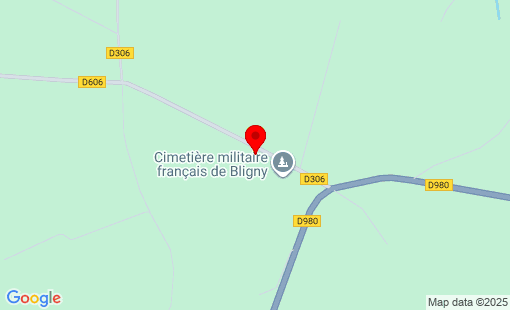
Bligny
Total Occupation: 4.732 fatalities
Total Occupation: 4.732 fatalities
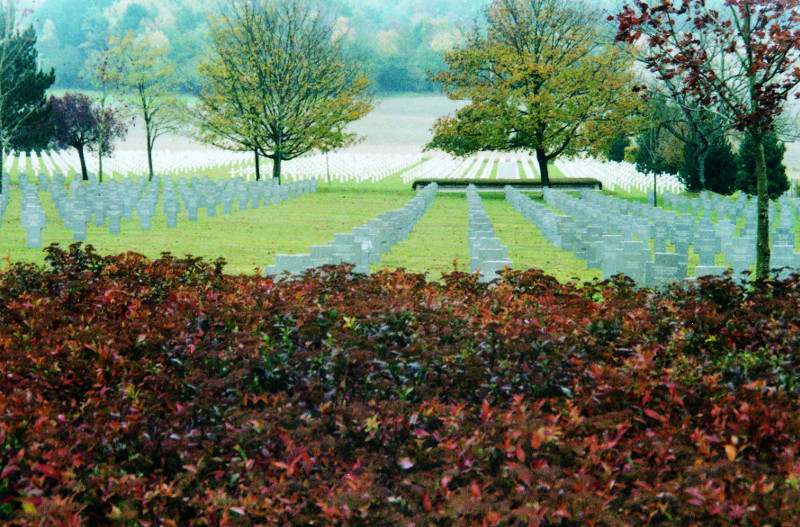
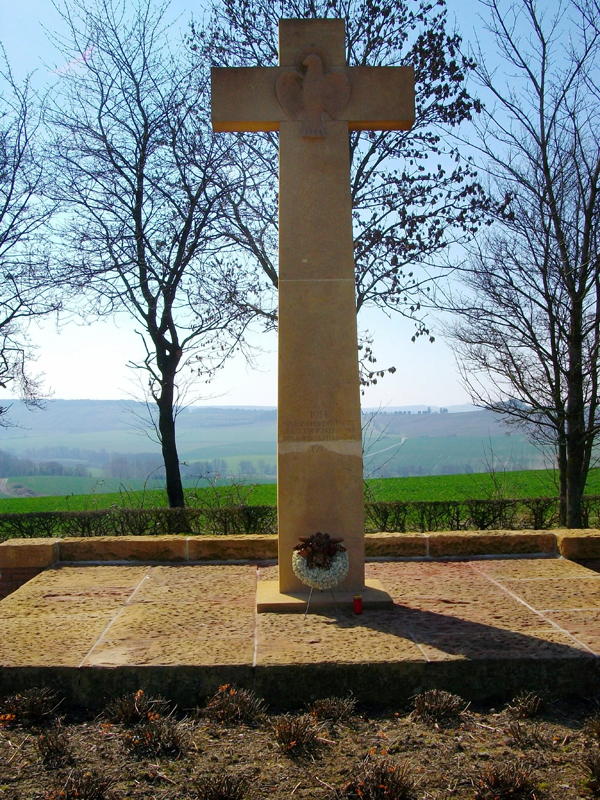
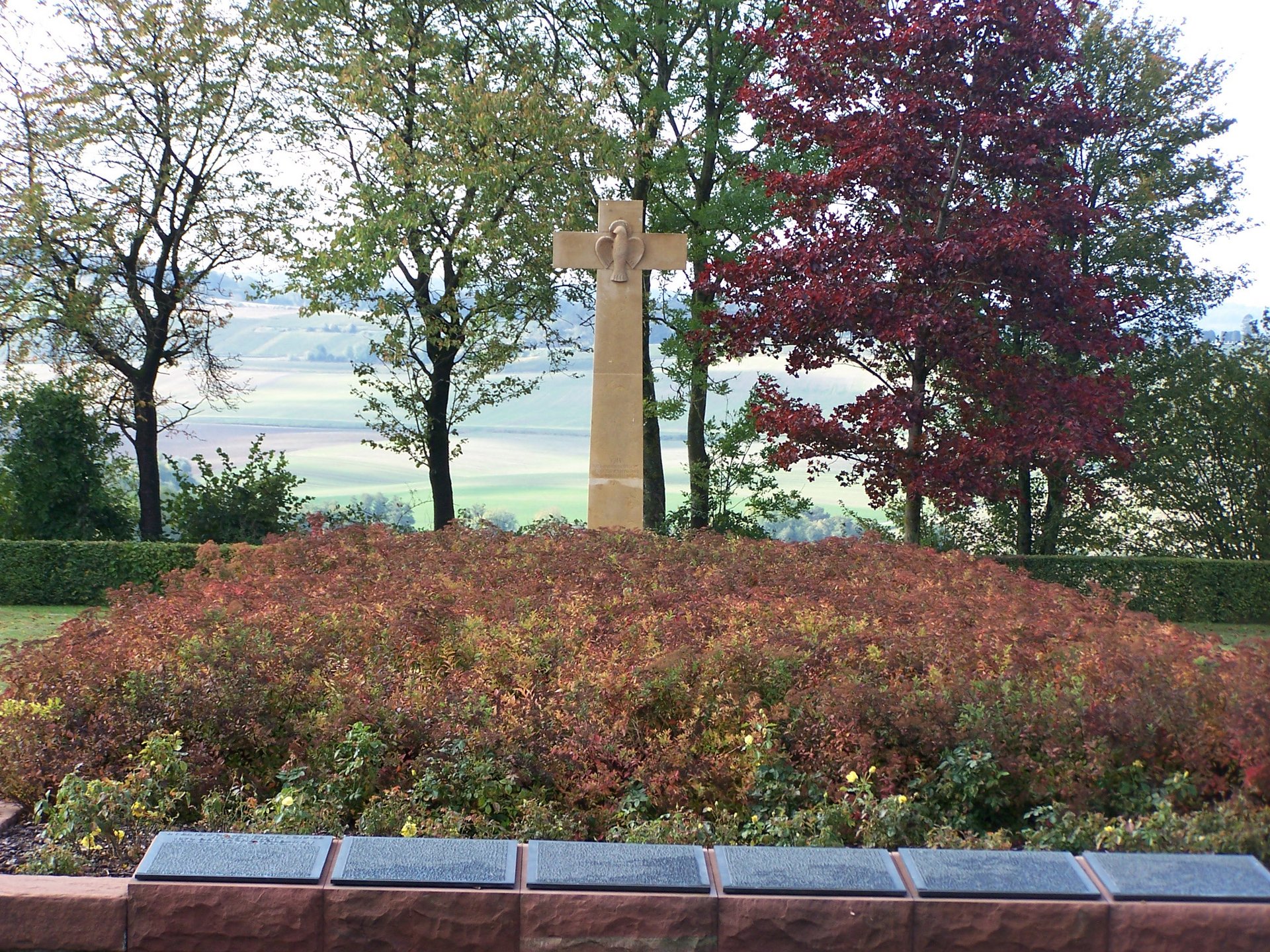
Département Marne 4,732 German war dead from the First World War 4,640 French casualties rest in the adjoining cemetery, 435 British and 3,550 Italian casualties lie - approx. 3 km southwest on the D 380 road - in their own cemeteries. The German military cemetery in Bligny - together with the French cemetery - was set up by the French military authorities as a collective cemetery after the end of the war. The dead from 37 communities, mainly from the area north and northwest of Bligny, were recovered from provisional field graves and cemeteries and reburied here. A small number of the victims died during the German advance and retreat from the Marne in August and September 1914. The losses were much higher during the French offensives in the winter of 1914/1915 and in the spring of 1917 and as a result of the major German attack in May and the retreat battles in the autumn of 1918. Many victims died in military hospitals, as prisoners of war or were found while clearing the battlefields. Among those resting here today are many Rhinelanders in particular, but also those whose home garrisons were located in almost all countries and provinces of the former German Reich. Repair work between the wars The Volksbund Deutsche Kriegsgräberfürsorge e.V. carried out the first work to improve the condition of the cemetery in 1928 on the basis of an agreement reached with the responsible French military authorities in 1926. This included the planting of greenery on the graves, the planting of trees and bushes, the installation of a hedge as an enclosure, the edging of the communal grave with natural stone walls and the erection of a high cross made of natural stone. However, the problem of permanently marking the graves remained unresolved due to a lack of foreign currency and the outbreak of the Second World War in 1939. Final design Following the conclusion of the Franco-German War Graves Agreement of July 19, 1966, the Volksbund Deutsche Kriegsgräberfürsorge e.V. - financially supported by the German government - was able to begin the final design of the German military cemeteries in France from the time of the First World War. In addition to a fundamental landscape gardening overhaul, which included the replanting of the graves and the renewal or addition of trees and hedges, the previous temporary wooden grave markers were replaced with natural stone crosses engraved with the names and dates of those buried here in 1972. A new entrance with a forged gate was also built. Of the 4,732 fallen, 3,062 rest in individual graves. Of these, 31 remain unknown. There are 1,670 dead in the two common graves. Only 511 are known by name. For religious reasons, the sixteen graves of the fallen of the Jewish faith were marked with a natural stone stele instead of a cross. The Hebrew characters read: 1. (above) "Here rests buried .... ." 2. (below) "May his soul be interwoven into the circle of the living."