Germany
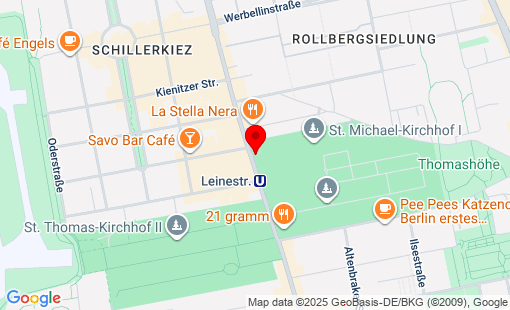
Berlin-Neukölln, Alter St.-Michael-Friedhof
Total Occupation: 216 fatalities
Total Occupation: 216 fatalities
Address
Hermannstr. 191-195
12049 Neukölln, Hermannstr. 191 - 195
Germany
The first cemetery of the St. Michael parish belongs to the third oldest Catholic church in Berlin, which was built after the Reformation. It is located on Hermannstraße in today's Neukölln district, north of the directly adjacent Protestant New Luisenstadt Cemetery. Created in 1863, it was extended to 2.2 hectares by 1895. The chapel in the late romantic style dates from 1884. was built in 1852 on what is now Karl-Marx-Allee. The church itself was built between 1851 and 1856 in the round arch style according to plans by Schinkel's pupil August Soller. Soller himself died three years before the completion of the building, which was primarily planned as a garrison church, and was buried in the church after its completion. It was located in the historic Luisenstadt district, which was divided by the Berlin Wall into the East Berlin district of Mitte and the West Berlin district of Kreuzberg. The congregation was also divided accordingly: the original church, which had been badly damaged on February 3, 1945, was now located in the eastern part of the city and was partially rebuilt. in 1961, a new St. Michael's Church was built in West Berlin. The parishes developed differently, and after reunification the western part was assigned to the parish of St. Marien-Liebfrauen and the eastern part to the cathedral parish of St. Hedwig. Various personalities were buried in the cemetery: - Alfred Rojek (1897-1975), lawyer, Nazi victim and city elder (honorary grave) - Richard Schönborn (1878-1957), politician and city elder (honorary grave) - August Scholz (1857-1923), the only translator authorized by Maxim Gorky (honorary grave until 2015) There are more than 200 graves in the Old St. Michael Cemetery with victims of the First and especially the Second World War. (Martin Bayer, 17.04.2020)